
Microplastics in Drinking Water: What We Know and What Removes Them
Microplastics have been detected in studies of drinking water, including tap and bottled water, but a published study does not measure the water at every Miami address. Health-risk research and measurement methods are still developing. If microplastics reduction is your goal, look for an explicit claim for the exact filter and cartridge. Do not assume an RO membrane or an NSF standard number proves complete removal of every microplastic and nanoplastic.
What are microplastics and nanoplastics?
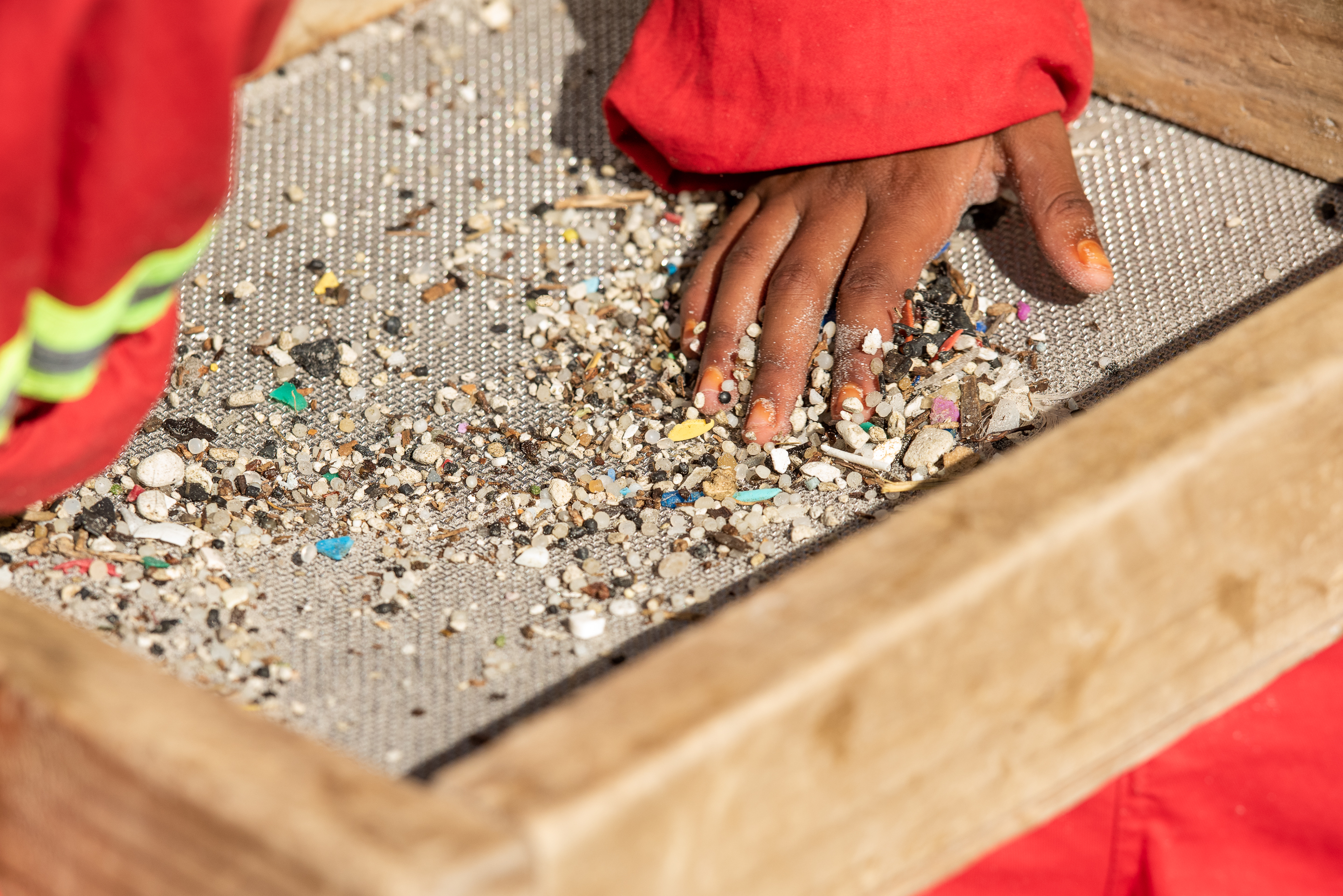
Microplastics are small plastic particles, commonly described as less than five millimeters in size. Nanoplastics are much smaller, often described as below one micrometer. FDA explains that definitions and measurement methods are not fully standardized. Particle size, shape and polymer composition vary, which makes a single headline number difficult to interpret without the study’s methods.
These terms describe particles, not every chemical associated with plastics. A result for BPA, for example, is not a count of plastic fragments. A PFAS concentration is also a different measurement. Keep the subject of the test clear before comparing reports or choosing treatment. Our chemical-contaminant guide explains why names, units and analytical methods must match the question.
What current health assessments say
FDA’s current assessment states that the available evidence does not demonstrate a human-health risk from the levels of microplastics or nanoplastics detected in foods, including bottled water, while recognizing substantial research gaps. That is not proof that every possible exposure is harmless. It also does not support claims that a particular household’s water is causing illness without relevant evidence.
The European Food Safety Authority’s October 2026 overview similarly describes limited knowledge of dietary exposure and health effects, with especially scarce nanoplastics data. It identifies an ongoing scientific review scheduled for completion by the end of 2027. An unfinished assessment should not be presented as a completed conclusion. Readers should check the date and scope of the source behind a health claim.
Separate three questions: whether particles were detected, what an experiment found about their behavior and whether ordinary drinking-water exposure has been shown to cause a particular health outcome. Evidence answering one does not automatically answer the others. A filter purchase should not be promoted as a proven way to prevent a disease when that outcome has not been demonstrated.
What the widely reported bottled-water study actually measured
A 2024 NIH research summary describes a study of three bottled-water brands using stimulated Raman scattering microscopy. The investigators estimated an average of about 240,000 plastic particles per liter in the tested samples, with roughly 90 percent classified as nanoplastics. The method identified smaller particles than many earlier approaches.
The scope matters. Those results are not a universal concentration for every bottle, a Miami tap-water measurement or a direct estimate of individual disease risk. A larger particle count from a more sensitive method does not necessarily mean that water became more contaminated between studies. It can mean that researchers could see a size range earlier methods missed.
When sharing that finding, keep the study year, sample type and method attached to the number. Avoid comparing it directly with a tap-water study that counted only larger particles. For a meaningful comparison, the samples and analytical approach need to be sufficiently alike. The original research paper provides the methodological context behind the headline.
What can we say specifically about Miami tap water?
This guide does not present a verified microplastics concentration for Miami-Dade tap water or for a Hydrality customer’s home. Findings from another country, a different utility or a bottled-water sample cannot fill that gap. A defensible local statement needs the provider, sampling location, collection date, analytical method, particle-size range and result.
Start with your actual utility’s current report and ask whether it has relevant testing information. If a report does not list microplastics, that omission is not a result of zero. It also does not establish a positive finding. Our report-reading guide explains how to distinguish an analyte that was tested from a topic that is absent from a table.
Keep an environmental sample separate from a drinking-water sample. A study of a beach, canal or other surface water can inform environmental research without measuring treated water at a kitchen faucet. The word Miami in a paper’s title is not enough to identify the sample as municipal drinking water. Read the sampling description before drawing a household conclusion.
How to assess a testing offer
Ask the laboratory what its method can identify and count. Does it report particle numbers, plastic mass, polymer types or another measure? What size range can it detect? How does it prevent or account for contamination during collection and processing? Request the instructions before collecting a sample, because ordinary containers and handling may not suit the method.
Ask how results will be reported and interpreted. A count per liter and a mass per liter describe different things. Two laboratories may report different size ranges, so their headline values may not be directly comparable. A result should identify what was measured rather than simply assign an unexplained “clean” or “unsafe” badge.
A handheld TDS meter does not identify microplastics. Neither does a photograph of residue or a basic color-change demonstration. Confirm the actual measurements included in any in-home visit. If specialized analysis is unavailable or its limitations are unclear, record the uncertainty instead of presenting an unrelated test as a substitute.
What to look for in a microplastics filter claim
NSF’s water-filter FAQ identifies NSF/ANSI 401 in connection with microplastics reduction. The practical step is to verify the exact product listing and the specific reduction claim. A product certified under 401 for selected emerging compounds should not automatically be described as certified for microplastics.
Match the full system model and replacement cartridge, then review the tested conditions, capacity and particle-size scope. If the seller provides only a standard number or a general pore-size statement, ask for the supporting listing. A claim concerning one particle range should not be extended to all smaller nanoplastics without evidence.
Also distinguish a certified finished system from a component or a laboratory demonstration. A membrane’s theoretical capability is not the same as verified performance of the installed assembly over its service life. The phrase “tested to” deserves a closer look at who tested what, under which conditions and with what result. Our certification guide explains the difference between a standard and a model-specific claim.
How to interpret Micromax 8500 information
The Micromax 8500 is an under-sink RO system with specified drinking-water reductions. WQA’s NSF/ANSI 58 listing includes claims such as TDS, lead and fluoride. Its NSF/ANSI 401 listing includes selected compounds such as BPA, estrone, ibuprofen, naproxen and nonylphenol.
Those reviewed listings do not establish an all-microplastics or all-nanoplastics removal promise. A BPA-reduction claim is not a microplastics claim, and a TDS-reduction claim does not measure plastic particles. If microplastics are the primary reason for considering equipment, request applicable evidence before making the purchase decision. For other identified concerns, evaluate the exact claims that are documented.
The same discipline applies to whole-home equipment. Hydronex has specific filtration and softening functions; its chlorine taste-and-odor and hardness listings should not be converted into an unsupported particle-removal guarantee. Product size, cost or placement at the water entry does not create an additional certification.
Compare practical options without overstating certainty
List your household goals separately: a specific particle-reduction claim, better taste, reduced bottle purchasing or another measured concern. One product may address more than one goal, but the evidence for each should remain distinct. Our RO, carbon and pitcher comparison explains how format, capacity and maintenance affect the choice.
If you want to reduce single-use packaging, a reusable bottle and a suitable refill routine can support that goal. That is a different claim from proving lower microplastics exposure or a health benefit. Keep reusable containers clean and follow their care instructions. Do not assume glass, stainless steel or any other container guarantees particle-free water throughout storage and use.
For bottled versus filtered tap water, compare the actual source and treatment documentation where available. A study of several brands does not rank every available product, and a filtered-tap label does not establish a verified particle count. Our bottled-water comparison also considers cost, convenience and maintenance.
Keep maintenance and emergencies in perspective
Whatever filter you select, follow its approved cartridge and service schedule. NSF’s maintenance guidance explains why a look-alike replacement is not automatically equivalent and why taste alone cannot establish remaining capacity. Keep the model, part number and replacement dates together so the installed configuration remains traceable.
Microplastics concerns should not lead you to disregard an immediate drinking-water advisory. During a hurricane or a boil-water notice, follow the utility and health department’s instructions. Our emergency-water guide explains the difference between advisory types. A long-term filtration preference does not override the need for an appropriate emergency supply.
Read a hypothetical comparison carefully
Imagine one report counts particles larger than ten micrometers and another counts down to one micrometer. Even if the second reports many more particles, you cannot conclude that its water has deteriorated or that its source is necessarily worse. The reports are looking at different windows. A fair comparison needs a shared method or a careful explanation of how the measurements relate.
Now imagine a filter report lists a percentage reduction without stating the starting concentration, tested particle sizes or replacement interval. The percentage alone cannot tell you what will come from your faucet after months of use. Request those details and the exact system configuration. These examples illustrate how to read a claim; they are not measurements of Miami water or performance data for a Hydrality product.
Build a decision you can review later
Save the source behind any claim that influences your decision. Include its date, the water sampled and the exact product where treatment is involved. Write down what remains uncertain. When new research appears, compare it with those details rather than replacing the entire decision with the newest headline.
For a Hydrality consultation, bring the specific question you want answered and confirm the testing scope in advance. We can discuss household treatment needs using documented model claims and relevant water information. A useful recommendation makes the evidence and its limits clear, so you can choose a practical next step without an unsupported promise of zero exposure.
Frequently asked questions
Are microplastics definitely present in my Miami tap water?
Research has detected plastic particles in tap and bottled water, but those findings do not establish the concentration at your address. This guide does not present a verified Miami household microplastics dataset. A local claim needs an identified sample, date, method and result.
Does bottled water contain microplastics?
Plastic particles have been detected in bottled-water studies. A widely reported 2024 study examined three brands and found many very small particles using a sensitive imaging method. That result is not a measurement of every brand or bottle and cannot by itself rank bottled water against your tap.
Are microplastics in drinking water proven to cause disease?
The evidence is still developing. FDA states that current evidence does not demonstrate a human-health risk from the levels detected in foods, including bottled water, while acknowledging important research gaps. Detection, biological effects in experiments and demonstrated risk at a particular exposure are different findings.
Does every NSF/ANSI 401 filter reduce microplastics?
No. Verify a microplastics-specific claim for the exact system and replacement cartridge. A listing for other emerging compounds does not automatically include microplastics, and a microplastics claim should not be extended to every nanoplastic size or to complete removal.
Is Micromax 8500 certified to remove all microplastics and nanoplastics?
The WQA claims reviewed for this guide do not establish that promise. Micromax 8500 has specified drinking-water reductions, including TDS, lead and fluoride under NSF/ANSI 58 and selected compounds under other standards. Those claims should be evaluated individually rather than converted into an all-particle guarantee.
Can my free home test or TDS meter measure microplastics?
A basic home screening or TDS reading does not establish a microplastics concentration. Specialized analysis needs an appropriate method, careful sample handling and clear particle-size reporting. Confirm the actual scope of any test before treating it as evidence for this concern.
By Hydrality
Last reviewed: November 17, 2026.
Sources: Hydrality: NSF/ANSI certifications for the systems we install