
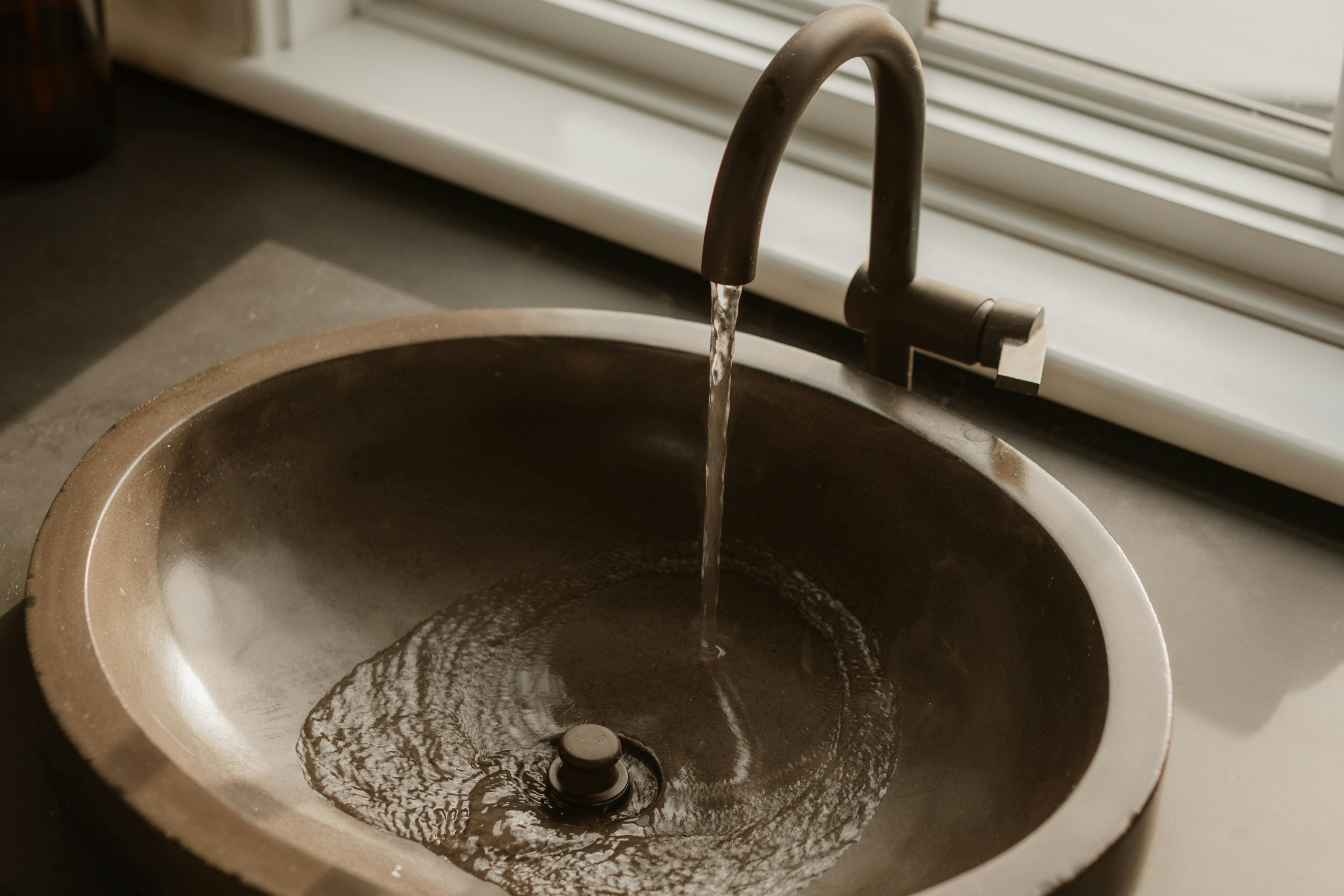
Why Does My Tap Water Smell? Pool, Rotten Egg and Musty Odors Explained
Tap-water odor can come from disinfectants, the public supply, a water heater, household plumbing or even the sink drain. The smell alone cannot identify a contaminant or establish safety. Note whether the change affects hot water, cold water, one fixture or several, check current utility notices and report new or unexplained changes before choosing a filter.
First separate a routine concern from an urgent change
If fuel, solvent or other toxic chemical contamination is suspected, use a different safe supply and contact the utility or health department. Do not taste questionable water to investigate it. CDC advisory guidance explains that boiling does not make chemically contaminated water safe. Follow the actual notice for your address, including any restrictions beyond drinking.
An immediate gas hazard or symptoms from a suspected exposure require urgent assistance rather than a home water demonstration. Do not enter enclosed spaces or deliberately inhale fumes to identify them. For less urgent odor complaints, a clear record of what changed can help the utility, building manager or plumber decide where to investigate.
Start with the date and location. Was the odor first noticed after a trip, plumbing work, a filter change or a loss of water pressure? Is there a current advisory? Record what you know without turning a coincidence into a confirmed cause. The sequence of events is useful evidence, but it still needs interpretation.
Why water may smell like chlorine or a swimming pool
Utilities use chlorine or chloramine to control germs. The CDC’s disinfection overview explains that these treatments can affect taste and smell, and that utilities sometimes switch between them. A noticeable smell is not a laboratory measurement of the disinfectant concentration. Review your provider’s current treatment information rather than estimating the level by odor strength.
Miami-Dade published a temporary chlorine-conversion notice for September 28 through October 11, 2026, explaining that customers might notice chlorine taste or smell. Those dates describe a past scheduled event. They do not explain every later complaint or establish that another conversion is underway. Check the date on any notice you find online.
If the change is new, give the utility your service address, when it began and whether multiple cold-water outlets are affected. Ask whether there is current maintenance or a treatment change in your area. Our chloramine guide explains why chlorine and chloramine must also be distinguished when evaluating filter claims.
Why water may smell like rotten eggs
Hydrogen sulfide can create a sulfur or rotten-egg odor. The Minnesota Department of Health describes possible sources including groundwater, sulfur bacteria, plumbing and water heaters. A hot-water-only pattern can direct attention toward the heater; a broader pattern can require a different investigation. These are clues, not a diagnosis from smell alone.
Have a qualified plumber or water-system professional assess the equipment. Removing an anode or changing heater settings without understanding the model can introduce other problems and may conflict with its instructions. Avoid treating a generic internet repair as a confirmed solution for your installation. Record the heater model and recent service history for the professional.
If the home uses a private well, identify whether the concern affects untreated water, softened water or only the hot-water branch. Do not assume municipal guidance describes a well. A well professional or laboratory can advise which analyses are appropriate and whether equipment inspection is needed. Our private-well guide covers the separate testing responsibilities.
Check whether the odor is localized to a fixture
NMB Water’s taste-and-odor information notes that the source can be the public supply or household plumbing, and that an apparent tap odor can come from a sink drain. That distinction matters: filtering incoming water may not correct a drain or fixture problem. Ask a plumber to assess a persistent localized issue.
Make a simple list of affected locations instead of repeatedly running every tap without a plan. Note the kitchen, bathrooms, laundry area and any separate drinking-water faucet. Distinguish the ordinary kitchen supply from an RO outlet or refrigerator dispenser. A problem that appears only after one device should be discussed with that device’s service provider.
For a condo, tell management whether neighboring units have reported a similar issue if that information is available. Do not enter shared utility spaces or adjust building equipment yourself. A common supply concern, a single apartment’s plumbing and one sink’s drain require different access and responsibility, even when residents describe the odor in similar terms.
Musty, earthy, metallic and plastic descriptions need context
Words used to describe an odor are useful, but people do not always use them consistently. “Metallic” may describe a taste, while “musty” may refer to a smell in the room or in the water. State what you actually noticed and where. Do not intentionally taste water that appears questionable just to choose a more precise description.
EPA’s secondary-standards guidance discusses aesthetic effects such as taste, color, odor and staining, including effects associated with metals and corrosion. These considerations differ from primary health standards. A nuisance description does not identify the concentration or establish that every possible concern is aesthetic.
If plumbing or a filter was recently installed, provide the exact product and installation date when asking for help. If the water has changed color as well, record that separately. A photo can document visible discoloration but cannot identify the substance. Avoid sending a photo to a seller and accepting a definitive contaminant diagnosis without appropriate evidence.
Understand what smell cannot tell you
Clear, odor-free water can still contain substances that require specific testing. Lead, for example, cannot be reliably identified by taste or smell; the CDC’s lead guidance addresses testing and exposure prevention. An odor complaint should not be used to diagnose lead, and the disappearance of an odor should not be presented as proof that lead has been removed.
The same reasoning applies to a basic TDS demonstration. A conductivity-based meter summarizes dissolved-ion behavior; it does not name the odor compound or measure individual PFAS. Keep the observation separate from the test result. “The water smelled different” and “this analyte measured this concentration” are different statements with different supporting evidence.
If a seller claims one quick reading explains every chemical, ask which method identifies each substance. A useful assessment should state the measurement, its units, the sample location and its limitations. Our chemical-contaminant guide explains how to connect a concern with an appropriate analysis.
Make a useful report to the utility or plumber
Prepare a short account: provider, service address, first observation, affected outlets, hot or cold water, recent work and any current notice. Add whether the concern is constant or intermittent, without attempting risky experiments. Ask who should investigate next and whether there are instructions about using the water while the cause is assessed.
For county customers, use Miami-Dade Water and Sewer’s official contact page. Other municipal customers should contact their own provider. If you do not receive the water bill, ask building management to identify the utility. Keep the response and reference number with your notes so you can follow up accurately.
A useful question is specific: “Several cold-water taps changed yesterday; is there current work in my service area?” Another is: “The odor occurs only at the hot-water outlets; can you inspect the heater and connected plumbing?” These descriptions are more informative than asking which filter eliminates all smells without locating the problem first.
Arrange testing that answers the actual question
If testing is advised, ask a certified drinking-water laboratory about the relevant analysis and collection procedure. Some samples need specific bottles, preservatives or handling. Do not collect water in a random jar and assume it will be suitable for every test. Follow the laboratory’s instructions before changing plumbing or treatment conditions.
Label each location clearly, including whether it is before or after treatment. If you want to assess a device, ask the laboratory how to compare incoming and treated samples. If the concern is the public supply, tell the utility about any household equipment that could affect the observation. A good sampling plan prevents a technically valid result from answering the wrong question.
Read the result with its units, reporting limits and collection date. Ask what it supports, what it does not test and whether follow-up is needed. Do not extend a negative result for one analyte to every possible cause of the smell. The water-report guide explains similar interpretation pitfalls.
Choose treatment only after identifying the purpose
When the confirmed goal is chlorine taste and odor, compare a model with that specific claim. WQA’s NSF/ANSI 42 listing includes Hydronex iGen 30C and 45C and Micromax 8500 for chlorine taste and odor. That does not establish a universal odor-removal claim, a chloramine claim or a solution for a faulty drain or water heater.
Review Hydronex for appropriately matched whole-home treatment and Micromax 8500 for its specific drinking-water role. Our certification page links the exact claims. Ask the installer to explain why the proposed system addresses the identified cause and which outlets it will treat.
Also review service history before replacing equipment. An overdue cartridge, an incorrect replacement part or a maintenance issue warrants assessment against the manufacturer’s instructions. NSF’s filter-care guidance emphasizes correct cartridges and replacement schedules. A change in taste or flow can prompt service, but normal taste does not prove remaining contaminant-reduction capacity.
Avoid changing several things at once
When there is no urgent restriction and a professional has provided a plan, keep the investigation organized. Replacing a cartridge, cleaning a drain and changing heater settings together can make it difficult to learn what helped. Record each approved action and its date. If the concern returns, that sequence gives the next person useful information instead of an uncertain recollection of several simultaneous changes.
Confirm the result and keep the record
After the utility, plumber or service provider addresses the issue, record the action and any required follow-up. Compare the same outlets under the agreed conditions. If laboratory testing was part of the investigation, follow the recommended verification plan rather than relying only on improved smell. Keep the findings so a recurring concern can be evaluated with context.
For a routine, nonurgent treatment discussion, contact Hydrality about your home’s water and confirm which measurements the visit includes. Bring your notes and any utility or laboratory response. The aim is to identify a useful next step, whether that is plumbing service, a targeted test, maintenance or a documented filtration option.
Frequently asked questions
Is a chlorine smell proof that tap water is unsafe?
No. Utilities use disinfectants to control germs, and odor does not measure their concentration. Check current provider notices and report a sudden or unexplained change. Do not assume every new smell is routine simply because a utility sometimes changes disinfectants.
Why does only my hot water smell like rotten eggs?
That pattern can point toward the water heater or hot-water plumbing, but it is not a diagnosis. Ask a qualified plumber to assess the system. Do not remove an anode, change temperature settings or add disinfectant without appropriate professional and manufacturer guidance.
Could the smell come from the sink instead of the water?
Yes. A drain or nearby plumbing can produce an odor that seems to come from running water. Note whether it occurs at one fixture or across the home, and ask a plumber to investigate persistent localized odors. The observation does not establish drinking-water safety.
Will any carbon filter remove chloramine?
No. Verify a specific chloramine claim or clearly identified performance documentation for the exact model, including operating conditions and capacity. A chlorine taste-and-odor certification is a different claim and should not be presented as proof of chloramine reduction.
Can a TDS meter identify what causes the odor?
No. A total-dissolved-solids meter does not identify individual chemicals, microbes or an odor’s cause. Testing should follow the question being investigated and the laboratory’s collection instructions. A low reading is not a substitute for appropriate analysis.
Should I boil water that smells like fuel or chemicals?
Do not rely on boiling to address suspected chemical contamination. Use a different safe supply and contact the utility or health department for instructions. Follow any do-not-drink or do-not-use notice, and seek urgent help if there is an immediate gas or exposure hazard.
By Hydrality
Last reviewed: November 17, 2026.
Sources: US EPA: Secondary drinking water standards · US EPA: Chloramines in drinking water