
Does Reverse Osmosis Remove Healthy Minerals? An Honest Answer
Yes, reverse osmosis can reduce calcium and magnesium in drinking water. That is part of reducing dissolved substances, not a separate sign that the system has failed. Whether to add minerals back depends on your water, taste preferences and individual nutrition needs. For a Miami home, the useful decision is to match verified treatment claims to the problem, then consider mineral content separately.
What happens to minerals during reverse osmosis?
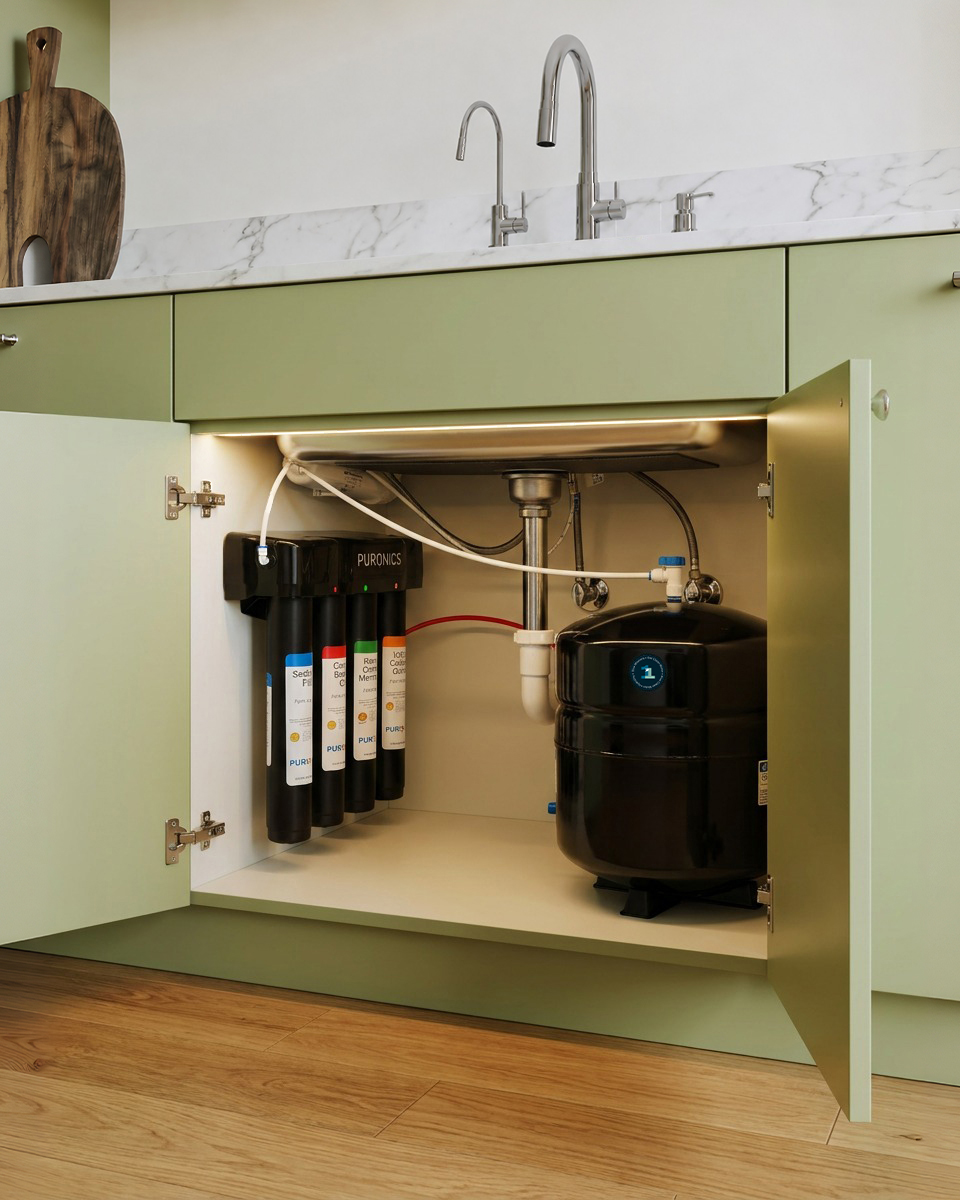
A reverse osmosis system uses pressure and a membrane to separate treated water from a more concentrated stream. It commonly combines that membrane with other filter stages. The CDC’s treatment overview identifies calcium and magnesium among substances RO may reduce and emphasizes checking the product label for specific chemical claims. Performance depends on the complete system, installation and operating conditions.
This means two claims need separate evidence: that a system reduces your target contaminant, and that it produces the mineral profile you prefer. A sales description such as “purified” cannot supply either missing number. Ask for the model, replacement components, applicable performance sheet and feed-water limits. If your goal is a particular calcium concentration, measure calcium rather than interpreting a general purity slogan.
Calcium and magnesium matter, but water is one source
Calcium supports bones, teeth and other body functions. The NIH calcium fact sheet describes dietary sources including dairy foods, some vegetables and fortified products. Magnesium also supports important body functions; the NIH magnesium fact sheet lists sources such as legumes, nuts, seeds, whole grains and leafy vegetables. Needs vary by age and other individual circumstances.
It would be misleading to say minerals in water never matter. It would also be misleading to diagnose a deficiency simply because someone drinks RO water. What matters nutritionally is the whole pattern of intake and individual health. A water-treatment consultation can describe the equipment and measured water composition. A clinician or registered dietitian can assess dietary adequacy, relevant health conditions and whether supplementation is appropriate.
If you already have a prescribed restriction involving sodium, potassium, fluids or mineral supplements, bring that concern to your healthcare professional before adding mineral drops or an accessory cartridge. An installer should explain what the accessory contains and how it performs, without choosing a personal supplement dose or promising a medical outcome.
What does the World Health Organization say?
The WHO’s 2005 report on nutrients in drinking water examined mineral changes, including those associated with desalination. Its 2009 calcium and magnesium report considered water’s contribution to intake and the evidence surrounding possible health effects. These are public-health discussions, not endorsements of a particular household filter.
The WHO drinking-water guidelines discussion of packaged waters explains that uncertainty prevents setting minimum concentrations of essential elements on nutritional grounds, and that evidence on long-term very low-mineral water does not support a simple universal recommendation. Accordingly, this guide does not claim that RO water is harmful to everyone or that mineral intake from water is irrelevant to everyone.
When comparing advice online, check whether the author is discussing a municipal desalination plant, bottled mineral water or an under-sink system. Those settings have different distribution, monitoring and household considerations. A quotation about corrosion control in a large water network does not automatically establish a dietary prescription for one family’s kitchen faucet.
Calculate water’s mineral contribution with the right numbers
If a laboratory reports calcium in milligrams per liter, multiplying that concentration by the liters you actually drink gives the calcium from that water. For illustration only, water containing 40 milligrams of calcium per liter would supply 80 milligrams through two liters. These are fictional values, not a Miami-Dade result, a recommended drinking volume or a result from a Hydrality customer.
Repeat the calculation separately for magnesium if it has been measured. Do not add together hardness, calcium and magnesium as if they were three independent nutrient quantities. Hardness is often reported as calcium carbonate equivalents, which is a different reporting convention. Our Miami hardness guide explains why hardness and contaminant concerns should be evaluated separately.
A useful comparison records the source-water value, the treated-water value, the sample date and the outlet. This is more informative than a generic statement that all Miami water contains the same minerals. Utility reports provide a starting point, while your home’s supply, treatment and the actual faucet determine what you are comparing.
Why TDS cannot answer the nutrition question
Total dissolved solids describes a broad category of dissolved material. A common handheld TDS meter estimates that total using conductivity. It does not tell you how much of the reading is calcium, magnesium, sodium or another substance. Two waters with similar readings can have different compositions, so a higher reading does not automatically mean better nutrition.
Likewise, a low reading cannot prove that PFAS, lead, microorganisms or every other concern is absent. An RO service technician may use appropriately interpreted feed and product measurements as part of checking system operation. That maintenance use should not be presented as a complete contaminant analysis. See our RO maintenance guide for the distinction between servicing equipment and verifying a specific water-quality concern.
If the question is whether a particular contaminant remains, use the appropriate certified laboratory test and sampling instructions. If the question is whether a mineral cartridge adds magnesium, request measured magnesium data. Choosing the measurement after defining the question avoids paying for a reassuring number that cannot answer it.
Remineralization: what to check before adding a stage
Some systems can use a compatible post-treatment stage to change mineral content and taste. The actual output depends on the media, incoming water, flow and service condition. Do not assume every product adds both calcium and magnesium, provides a fixed dose, or has the same effect throughout its replacement interval.
Ask which minerals the proposed cartridge contains, what performance information supports its claims, and whether the manufacturer approves it for your exact system. Confirm where it is installed and which outlets receive that water. A kitchen faucet and a refrigerator connection might be arranged differently, so the installer should explain the actual plumbing configuration.
Also ask for the replacement schedule, installed cost, service access and any effect on the system’s listed configuration or warranty terms. Adding a generic accessory should not be described as automatically covered by the original complete-system certification. Keep written compatibility information with the equipment manual and service record.
Taste is a legitimate preference. If you have the opportunity to compare correctly maintained options, use the same temperature and similar serving conditions. Decide whether you prefer the difference before paying for an extra stage. Taste preference and verified contaminant reduction are separate parts of the purchase decision.
How RO differs from softening and carbon filtration
A traditional ion-exchange softener reduces hardness by exchanging hardness ions for sodium or potassium ions. It is designed for a different job from an RO membrane and does not simply eliminate all dissolved solids. A salt-free conditioner also should not be described as removing calcium and magnesium unless its exact technology and evidence support that claim. Compare softeners and salt-free conditioners before choosing equipment for scale.
Carbon filtration is another category. Its performance depends on the media and complete system; a carbon product selected for taste should not be assumed to provide broad mineral reduction. Our RO versus carbon comparison helps connect the technology to the actual goal.
A household can have more than one goal, such as reducing scale at fixtures and addressing a specific drinking-water concern in the kitchen. That may call for separate equipment, but it does not mean every home needs both. The whole-home versus RO guide explains the difference in coverage.
What the Micromax 8500 listing actually supports
The WQA NSF/ANSI 58 listing for the Micromax 8500 includes total dissolved solids reduction and specified contaminant claims, including lead and fluoride. This supports discussing those listed claims under the applicable test conditions. It is not a promise that every mineral reaches zero or that every contaminant is addressed.
Our certifications page explains why the standard number, exact model and individual claim all matter. For example, certification concerning lead content in materials is different from certification for reducing lead in treated water. The complete listing should guide the claim, rather than the number of certification logos in an advertisement.
If you are considering the Micromax 8500, ask Hydrality to confirm the current configuration, feed-water suitability and any proposed accessory before installation. This article does not represent a remineralization option as included, available or certified without that confirmation.
A practical decision for a Miami household
Start with the reason you are shopping: taste, a laboratory result, convenience or a specific treatment objective. Identify your actual utility or private well and review the relevant water information. Then compare systems against the target rather than treating “more minerals” or “fewer minerals” as a universal score for water quality.
Next, separate daily use from special requirements. Drinking, cooking, infant feeding, an appliance and a medically prescribed use may require different considerations. Follow current public-health advisories even when an RO system is installed. For infant formula, use the product instructions and CDC preparation guidance; do not use a TDS reading as evidence that water or equipment is sterile.
Finally, choose a maintenance plan you can sustain. Record approved replacement parts, installation date, service intervals and the person responsible for upkeep. Ask how seasonal absences affect restart instructions. A carefully chosen mineral profile is of little practical value if the equipment is neglected or household members do not know which faucet it serves.
Hydrality can help compare treatment configurations through a free home water consultation. Confirm which measurements are included when booking. Individual mineral analysis, contaminant testing and nutritional assessment are different services, so request the appropriate information for your question.
Questions to include in your installation quote
Request a written description of the base system and any optional mineral stage as separate items. The quote should identify the drinking-water outlet, any refrigerator connection, the approved cartridges and the expected service tasks. Ask whether routine service includes checking pressure, leaks and system operation, and which laboratory analyses would require a separate appointment. This keeps the equipment agreement clear without turning a standard service visit into an implied medical or contaminant assessment.
Consider a household choosing between two proposals: one includes an RO system alone, while the other adds a mineral cartridge. Compare the base systems first, using the same target contaminant and installation requirements. Then compare the accessory’s documented composition, compatibility, replacement cost and your taste preference. A higher price or a higher advertised pH is not, by itself, evidence that the second proposal better addresses the original water concern.
Save the information for future service. If a replacement cartridge has a different model number, ask the technician to explain whether it is an approved equivalent and whether the mineral composition or certification scope changes. Recheck the relevant documentation when equipment changes, rather than relying indefinitely on the information provided at the first installation.
Common questions
Does reverse osmosis remove calcium and magnesium?
Yes. Reverse osmosis can reduce dissolved calcium and magnesium along with other dissolved substances. The amount depends on the system and feed water. Check its performance information, and use a laboratory mineral analysis if you need individual calcium or magnesium concentrations.
Do I need to add minerals back to RO water?
Remineralization is an optional design choice that can change taste and mineral content. It is not automatically a nutritional requirement for every household. Consider your water analysis, diet and preferences; ask a qualified clinician about individual nutrition or medical restrictions.
Does a TDS meter show whether water has enough healthy minerals?
No. A handheld TDS meter estimates total dissolved solids from electrical conductivity. It cannot separate calcium from sodium or identify individual contaminants, and it does not measure nutritional adequacy or certify drinking-water safety.
Is alkaline water the same as remineralized water?
No. Alkaline describes pH, while remineralization describes adding minerals. An added mineral stage can affect pH, but the resulting composition depends on its materials and operating conditions. A higher pH alone does not establish a health benefit or a contaminant reduction claim.
Does the Micromax 8500 have a verified mineral-removal certification?
The WQA listing for the Micromax 8500 includes total dissolved solids reduction under NSF/ANSI 58. That is different from a promised concentration of each individual nutrient. Ask for the exact system performance sheet and confirmation of any proposed remineralization accessory.
Can I use RO water for drinking and cooking?
A properly selected and maintained system can supply water for everyday drinking and cooking within its intended conditions. Follow current utility advisories and manufacturer instructions. Infant feeding and medical water requirements need their own professional guidance; low TDS is not proof of sterility.
By Hydrality
Last reviewed: November 17, 2026.
Sources: US EPA: Secondary drinking water standards · Hydrality: NSF/ANSI certifications for the systems we install